Transition to Culture by Design, Human Powered, AI Augmented
AI is rapidly becoming a transformational resource. It’s already affecting white collar jobs. In response, organizations would benefit from reconsidering the following:
- Which values still apply?
- Which have become unnecessary (or archaic)?
- Which new ones could be beneficially added?
- Are we best supporting humans in their evolving roles?
- Are explicitly stated cultures and values necessary to succeed in business?
There are many reasons why this needs to be challenged.
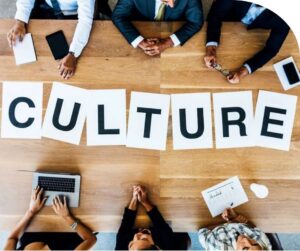
Corporate cultures weren’t conceived until the 1920’s, when a study showed that “social relationships and group norms strongly influenced worker performance.” Around 1979–1982 “Academic and business interest surged and Executives began seeing culture as a driver of performance, not just a byproduct.”
It was a business reason and motivation that drove the concept.
Does a change as transformational as the current use and early adoption of AI into the business warrant a chat around the water cooler or espresso machine? Should companies wait until the dust settles? Is there a perfect time to contemplate how an intentional culture may or may not contribute to success in the new environment?
At a minimum, companies should reflect on their current culture and whether their values conflict with the narrative that efficiency and productivity are the only ways to compete and win.
Recent departures of key talent at AI companies like Anthropic and Meta are indicative of a shift in corporate culture and a change in values, resulting from AI entering the scene. So it is not just the thousands of people being laid off that signal the impact of AI on jobs, it is also the few that these companies might have preferred to retain.
The nature of cultures
Cultures develop by design or by default. Organic cultural foundations happen when founders and entrepreneurs hire like-minded individuals who might share similar values, and have bought into the vision and mission of the endeavor.
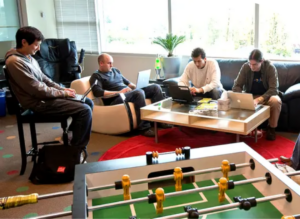
The leaders set the tone for behavior. The boundaries are set by how they act – starting times, communication methods, degrees of formality, handshake agreements or lengthy legal documents, cursing allowed, social behaviors, personal boundaries (nights and weekends calls from managers), etc.
The commitments regarding acceptable behaviors that are made at the beginning of the relationship are more often implicit, and the hierarchy establishes the norms amongst team members. The tone is normalized and the dynamic can be smooth when all team members behave in a similar manner.
These initial behaviors might or might not serve the company well over time. Cultures evolve! In 2018 Google removed their famous “don’t be evil” value/tag line.
It’s unclear as to why they did it, but it coincided with the forming of Alphabet, the parent company. The narrative changed to “do the right thing.” Where the interpretation of ‘evil’ is universal, what is ‘right’ is much more debatable, giving wiggle room to behaviors within organizations.

When the organization grows beyond the circle of internal referrals, hiring individuals who might object to the behaviors, or bring in different and potentially controversial behaviors, the culture enters a transition period when there is an adjustment, correction, that typically results in a culture palatable to different people, with diverse values and experiences.
If one of the embedded behaviors is self-awareness, the leadership observes how the culture is changing and intentionally addresses sources of conflict or development of habits that work against the growth and level of harmony, or how much conflict to embrace, in the spirit of innovation and growth. If awareness is not in the repertoire, or conflict aversion is in the foundation, the opportunity to correct course is missed, and the culture deteriorates to the point of dysfunctionality and ultimately poor economic performance. Enron and Theranos are in the extreme of morally corrupt cultures that failed miserably. But there are less extreme examples.
Regardless of the stated core values, what matters most is, can the leadership be trusted to do what they say they will do? It matters less ‘what’ that is – if the leadership indicates that a core value is ‘do no evil’, and they start doing evil, they can’t be trusted. If the message is ‘make as much money for the company as possible, and you’ll be rewarded for upholding that value’ – and they follow through, that’s a trustworthy value. We can judge if the values align with ours or not, and choose to not work for that company. But that is different from judging whether values are truthful and honest.
When it comes to TRUST, doing what we say we will do is all that matters.
Enter AI
AI will impact companies’ cultures in various stages differently and in varying timeframes.

Agility is vital to transitioning into a fully productive and satisfying culture that employees can be proud of. Hence, some larger companies might encounter more challenges pivoting, minimizing chaos, and it might be easier for smaller companies.
For new companies, entrepreneurs and leaders come with experience, but also in a fund raising environment that has already determined its worth. Many are promising success based on their AI ‘strategy’. Few will deliver, perhaps the same percentage that in the past when a different technology hype came at us with impunity (.com bubble 1995-2000, bust 2000-2002). Or a pandemic! These are the external factors that impact culture. We have limited, if any control over these changes.
With AI on the scene, CEOs still address culture.
Two examples worthy of mention in this context:
Reed Hastings, long term Founder and ex-CEO and currently Chairman of the Board at Netflix, has gained fame in his reputation as a cultural leader. Amongst his most famous quotes:
- “Lead with context, not control.” [5, Goodreads]
- “Companies rarely die from moving too fast, and they frequently die from moving too slowly.” [SucceedFeed]
- “At Netflix, we think you have to build a sense of responsibility where people care about the enterprise. Hard work… doesn’t matter as much to us. We care about great work.”
- “You have to be big, fast, and flexible.” [Medium]
- “Most entrepreneurial ideas will sound crazy, stupid and uneconomic, and then they’ll turn out to be right.” [SucceedFeed]
What would be the behaviors in the organization that these messages might influence?
Alex Karp, Palintir’s CEO, has made waves in the corporate world, both with his political stance, economic success, and openly anti-WOKE narrative. These are some of his quotes.
- “Warrior Culture” & Performance: “We are dedicating the company to the service of the West and the USA,” [as discussed in this Reddit post]. Karp describes his company as “chaos in the best way,” where people move fast and focus on mission over hierarchy, [as mentioned on this Instagram reel].
- Anti-Woke Meritocracy: Karp calls his company “completely anti-woke,” emphasizing that talent and results matter more than ideology. He has described Palantir’s values as “fighting for the right side of what should work in this country — meritocracy, lethal technology,” [as noted in this Business Insider article].
- Value Creation vs. Status Quo: “We get paid on value creation. Everybody in this world is going to get paid on value creation,” as reported by Forbes.
- Corporate Accountability: “Poor people are the only people who pay the price for being wrong in this culture,” Karp said, arguing that executives should absorb the risks of their decisions, [according to this Fox Business article].
- Western Values & Tech: In a letter, he stated that “the rise of the West was not made possible ‘by the superiority of its ideas or values or religion… but rather by its superiority in applying organized violence,'” [as highlighted in this Facebook post].
Same question, what behaviors can be expected from the organization that is led with these goals and values?
It would take many more interviews to fact-check the actual impact of the messages from these leaders with regard to culture, core values, and behaviors. The point here is not to define what a good or bad culture is. The point is that employees are buying into these cultures, and the learned behaviors, how they impact the world, don’t stay at work. This has to be a conscious decision.
Early keen awareness of how external factors are impacting our business and professional growth applies. Awareness alone is insufficient. These conversations with the team need to happen now. Not decision-making meetings. Thought provoking discussions that inspire team members to have agency on the outcome, and build an emotional and intellectual individual investment that may result in a shared benefit between the employer and the employee. Organizations will benefit from the inclusion of diverse opinions regarding AI adoption. The topic must be demystified, so that the organization can recognize AI as a resource, or a challenge for the human in each role.
It can’t be left at ‘talk’. The outcome has to be acted upon and with the sense of urgency that applies when the environment is moving as fast as this is moving. Analysis paralysis could kick in, because it’s a complex and complicated challenge.
Most leaders might choose to ask an AI agent about cultures, values and behaviors. The responses will be based on history, how these concepts have been interpreted in the past. The AI content is expansive, because the opinions and developments regarding cultures have been fully documented by humans. The leaders will still have to make a judgment call, and this is the right time to be innovative and creative, not to copy and paste from the past.
The Opportunity
“The transition to an A.I.-first world may be inevitable, but the path is still being paved with the heavy lifting of the very people being phased out.” Is this what the company wanted? As an example…
Moving too fast through the “transition” period is a mistake, because we are not operating in a business as usual mode. It is a high expectation given that what’s ‘right’ is up for interpretation. Some executives care a lot, others don’t, but changes in leadership take time and full value alignment is challenging to achieve.

A lukewarm, comfortable enough culture won’t cut it, if companies want for employees to embrace the change. It must be good enough to retain all valuable talent, or companies risk losing what gave them the competitive advantage.
Employers that proactively decide to transform the culture, prevent unintended harm to humans, use AI to enhance performance, feed self-esteem and confidence in all, and build a greater business culture than previously conceived, will demonstrate the way to preserve and build a thriving human workforce. Employees can view this as an opportunity to emphasize the FORCE in the workforce, and insist on the changes that they wish to see enacted in the new environment.
This conversation with employees about AI-given transitions has to start now, along with dedicating adequate dollar budgets and time allocation for training and development, and exercising flexibility on what type of employment relationship makes sense for varied roles. Organizational development and headcount planning can be very different from how it has been done.
Companies and employees will benefit from better planning and more training. Companies that do this well and early will have an edge in the future. Employees that receive AI training, and adjust well to the new environment, will acquire more value and agency regarding their future.

 In the cleanest scenario, as ironic as it might be, the relationship ends with a death. Closure is irrefutable, and the grieving process is filled with humanity and compassion from others.
 After sitting for decades at the table where these life altering decisions have been made, the experience hasn’t changed much. Leadership teams struggle with their decisions and positions depending on how they view people in the equation. Are we resources? Team members? Collaborators? Contributors? Commodities? Perhaps we saw and understood these attitudes and beliefs during the good times, but there is no other time when we experience the true colors more than when the ship is going down, or as we have seen recently, when the data shows that companies don’t need, or won’t need, the same number of people currently in their payroll.
 Handling these layoffs unskillfully has the real potential to damage the fabric of our society. To prevent this, we need skillful communication, with empathy, listening skills, patience, sympathy, negotiation skills, diligent follow up, and even love for our fellow human being can throughout the process. For an employee, separating from an employer involves a grieving process. To come through that process with one’s dignity intact requires support from the employer and/or from the wider community.
  Timing.
 Communication
 Organization.
 Outsource Support.
 Exit.
Exit.